Helping Founders Build Purpose-Driven Companies: Ambassador Jonathan Kaplan Joins Celesta
Helping Founders Build Purpose-Driven Companies: Ambassador Jonathan Kaplan Joins Celesta
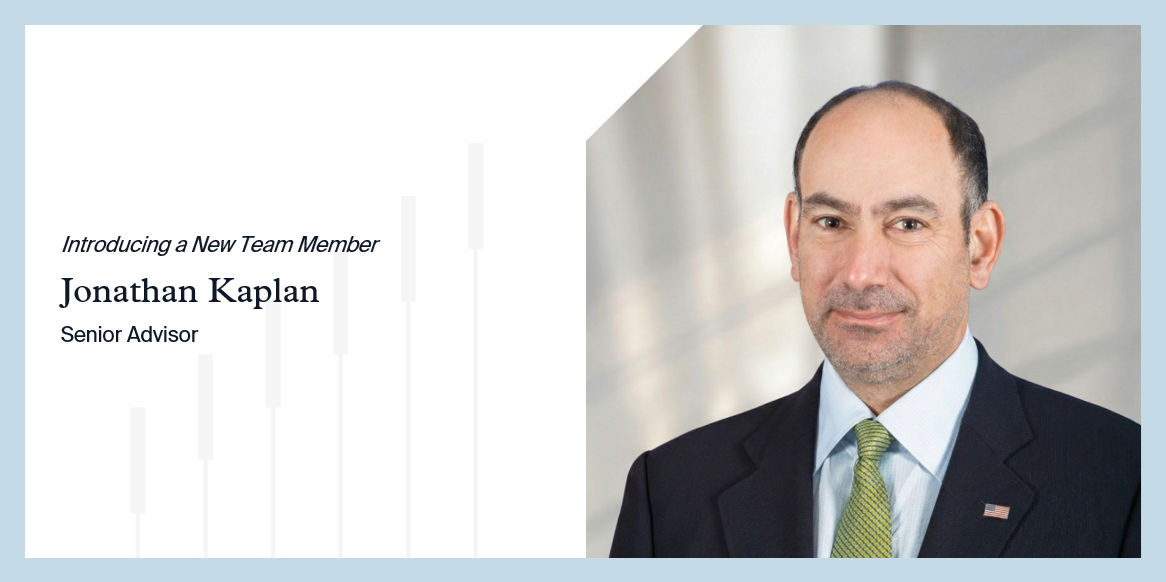
As Celesta continues to partner with founders building impactful global technology companies, we are proud to welcome Jonathan Kaplan as a Senior Advisor and excited about the impact he will have for our portfolio and broader ecosystem. Jonathan brings a uniquely broad perspective to Celesta, with a career that has included founding and building numerous companies, philanthropy, and serving in one of the highest-profile posts in American diplomacy. In this Q&A, he shares insights from across his career, why he was excited to work with Celesta founders, and how he believes he can help founders turn bold ideas into enduring companies.
As Celesta continues to partner with founders building impactful global technology companies, we are proud to welcome Jonathan Kaplan as a Senior Advisor and excited about the impact he will have for our portfolio and broader ecosystem. Jonathan brings a uniquely broad perspective to Celesta, with a career that has included founding and building numerous companies, philanthropy, and serving in one of the highest-profile posts in American diplomacy. In this Q&A, he shares insights from across his career, why he was excited to work with Celesta founders, and how he believes he can help founders turn bold ideas into enduring companies.
You’ve had a remarkably broad career across business, philanthropy, and public service. What do you see as the through line?
There are probably two answers to that. The first is a little tongue in cheek, but it’s true: I get bored easily. A lot of entrepreneurs are like that. They want to build, explore, and try new things.
But the more important answer is that I’ve always wanted to try to change the world. I’ve long believed that if the work you’re doing genuinely makes life better for people, then success tends to follow. That was true in my entrepreneurial career, it was true in philanthropy, and it was certainly true when I served as ambassador to Singapore. In every case, the motivation was the same: try to do something meaningful, and let the business success come from that.
When you look back across your career, is there an accomplishment that stands out?
Many of them have come from watching teams excel, helping entrepreneurs live their dreams, and trying to make the impossible possible.
That said, becoming an ambassador and serving my country was the honor of a lifetime. It gave me the opportunity to stop being someone who simply comments on the world and instead become someone who could try to improve it. It’s easy to complain. It’s much harder — and much more rewarding I’ve found — to step up and do something.
That’s one of the reasons I always encourage entrepreneurs to stay ambitious. I was just a young kid from Long Island, and thirty years later I had the chance to serve the United States abroad and work on issues of real consequence. Big outcomes often start from very ordinary beginnings.
What has brought you to venture at this stage of your career? Did something draw you to Celesta in particular?
What stood out to me about Celesta was that so many of the companies are not just trying to build successful businesses, they’re trying to solve important problems. There are a lot of firms backing interesting technology. What felt different here was the sense that the portfolio has the potential to really improve the world.
When I spoke with the partners, the question for me wasn’t simply “Could these companies be successful financially?” I believed many of them could. The more interesting question was: “Do they have a real chance to change lives?”
That’s what made this role compelling. It’s a chance to help entrepreneurs who are building with real purpose, whether by helping to improve health, energy, mobility, education, or the broader human condition.
“I’ve long believed that if the work you’re doing genuinely makes life better for people, then success tends to follow.” — Jonathan Kaplan
How do you think about your new advisor role at Celesta? What do you hope to bring to founders?
I’ve always tried to support young entrepreneurs. At Carnegie Mellon, we started a program to help founders get companies off the ground. I’ve long believed that entrepreneurship is about doing, not just talking. Dreamers have ideas, and that’s important. But great entrepreneurs take those ideas and turn them into action, into products, and bring something into the world that people love.
So my hope is to be useful in practical ways. That may mean offering founders advice, helping them think through strategy, opening doors for them, sitting on boards, or helping them navigate the human and leadership side of company-building.
Talking is cheap and doing is expensive. Founders are in the expensive business of “doing,” and I want to help them do it well.
You’ve already began working with some of Celesta’s portfolio companies. What has stood out so far?
Honestly, one of my first reactions was that I’m not sure I could cut it as an entrepreneur starting out today! These founders are incredibly smart, motivated, and operating with tools that are almost mind-boggling compared to what existed earlier in my career.
The other thing that has stood out is the quality of engagement. The boards are healthy. People challenge each other, but they do it respectfully and constructively. That matters. You want real debate, but you also want a shared commitment to building something durable. So far, it has been a pleasure to see that dynamic in action.
For founders across the portfolio, where do you think you can be most helpful?
If you’re trying to build great products, market them effectively, build your business in Asia, work with government stakeholders, or how to engage with investors, customers, or partnerships: those are all areas where I can help.
A big part of building a company is learning how to manage the people around the company as well as the company itself. Founders have to manage investors, boards, growth, talent, and risk all at once. Having someone beside you whom you trust can make a real difference.
I also believe strongly in maintaining relationships with entrepreneurs whether or not Celesta invests. Some founders may choose another firm. Some may bootstrap. That’s fine. Great relationships compound over time. And one of Celesta’s real strengths is helping founders see the scale inside an idea — not only making big ideas bigger, but sometimes helping uncover how an idea that seems niche could become much more important than it first appears.
You’ve built and led companies yourself. What leadership lessons do you find yourself returning to most often?
One of the biggest is surprisingly simple: say thank you.
When you’re building a company, everything moves fast. You’re fundraising, recruiting, shipping products, solving problems every day. It becomes easy to overlook the people around you who are helping carry the dream. But they are putting real energy into something that matters deeply to you.
Taking the time to recognize that effort matters more than people realize. Maybe that’s coffee, a meal, just pausing to acknowledge a contribution. It sounds like soft stuff, but it isn’t. Companies succeed when teams want them to succeed. Great leaders not only set direction, but make it easier for people to do great work and feel valued while doing it.
Given your diplomatic experience, what’s your advice to founders building in a more complex geopolitical environment?
The geopolitical environment will always shift. There will be uncertainty, conflict, and changing conditions. Founders can’t afford to be consumed by every headline. That’s where boards, advisors, and experienced investors can help. Let them think about the broader landscape and how it may affect the company. The founder’s job is to keep building.
Of course there are times when government matters — regulation, approvals, market access, international expansion. Those things are real. But most of the time, companies win by focusing on product, customers, capital, talent, and execution.
Are there sectors you’re especially excited about right now?
Absolutely. The world is going to need a lot more energy, and sustainable energy solutions are going to be essential. Healthcare and the intersection of AI, bioscience, and better systems is another where there is a huge opportunity for solving diseases, improving care, and preparing for future pandemics. I also care deeply about education and mobility.
Across all of these categories, the common theme for me is the consumer. Where I believe I can be especially helpful to founders is making sure products are not only technologically impressive, but actually loved by the people they’re meant to serve. The companies that win are the ones who can make that connection.