Meet Jennifer Erskine: Building Deep Tech Ambition in Canada
Meet Jennifer Erskine: Building Deep Tech Ambition in Canada
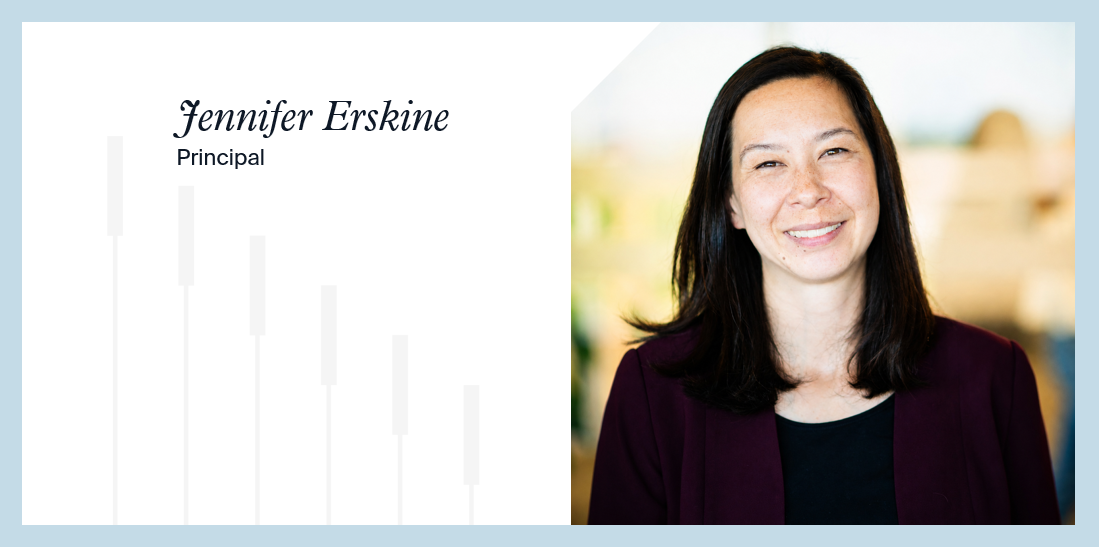
Celesta Capital is excited to welcome Jennifer Erskine as a Principal supporting our expansion into the Canada market. Jennifer brings a rare combination of hands-on scientific and investment experience, having built early-stage quantum technology in the lab before moving into venture capital. Most recently she invested out of BDC's deep tech fund, where she developed a firsthand view of Canada's underserved but world-class technology ecosystem. We sat down with Jennifer to talk about her path to venture, what she looks for in founders, and why she believes Canadian deep tech is ready for the global stage.
Celesta Capital is excited to welcome Jennifer Erskine as a Principal supporting our expansion into the Canada market. Jennifer brings a rare combination of hands-on scientific and investment experience, having built early-stage quantum technology in the lab before moving into venture capital. Most recently she invested out of BDC's deep tech fund, where she developed a firsthand view of Canada's underserved but world-class technology ecosystem. We sat down with Jennifer to talk about her path to venture, what she looks for in founders, and why she believes Canadian deep tech is ready for the global stage.
You started your career building quantum sensing technology at the Quantum Valley Ideas Lab. What pulled you from the lab to the deal side?
I’ve always been interested in how advanced technologies are commercialized, even since my undergrad days. The early part of my career was on the research side, first in grad school and then at Quantum Valley Ideas Lab, which was a hands-on lab role focused on early commercialization for quantum sensing.
When I was looking for my next challenge, I connected with some people who had already made the jump from a science background into venture. The more we talked, I realized VC was just another angle on that same interest in commercialization. What appealed to me was the breadth. Rather than being the expert in one narrow niche, you can explore the connections between a range of emerging technologies.
Investing is also a multidimensional challenge, where you’re asking: What is the commercial opportunity? Is this the right team? What is the timeline for the market? In research you affect your one project; in investing you have the chance to impact so many different projects.
What did you carry over from your time as a scientist to your role as an investor?
I think I offer a real understanding of the research community. Some people are drawn to science for the sake of discovery, others to commercialization and the business side, and not everyone can or wants to do both. Recognizing those characteristics early in a founding team has been helpful. Both types can play a major role in a company’s success, but self-awareness within the team makes a big difference.
The other piece is critical thinking. Research teaches you to track down original material and put the pieces together yourself. Investing in highly technical companies works the same way: you read the papers, the patents, study the market. You have to think critically not just about what's been done, but about what's possible in the future.
There are sectors where Canada's research already competes with much larger players globally, and the potential is for commercialization to be world-class, too.
What drew you to join Celesta?
More than anything, Celesta's vision for Canada. At BDC we co-invested with Celesta in Stathera, and I saw firsthand the impact the Celesta team has had on that company — the connections they make, the strategic guidance they provide to management and the founder.
Canada has world-class R&D and founders pushing to commercialize that technology, but many early-stage startups lack the networks and operational expertise to scale globally. Matching what Celesta offers with those companies can launch them to global success in a way Canada has struggled to achieve in the past. I believe in that opportunity, and I wanted to be part of it.
The caliber of the team was the other draw. It's world class, and the chance to develop alongside that level of talent was hard to pass up.
In your previous role, you invested out of one of Canada’s largest dedicated deep tech funds. Were there lessons you’ve taken from that experience?
BDC created that fund to address a real gap in the funding landscape, but the gap itself was the opportunity: an underserved market meant more companies competing for fewer dollars, less pressure on valuations, and the ability to be selective. Investing out of it proved the thesis true. We found fabulous companies with great technology that struggled to find Canadian investors with the technical depth to evaluate deep tech, let alone the experience to help scale it. Many of those teams desperately wanted to stay Canadian, both out of national pride and because of the real economic benefits to remaining a Canadian-controlled private corporation. The technology and talent are there. What hasn’t been, historically, is enough capital or VCs willing to support those ventures.
Which sectors excite you most in Canada today?
There are sectors where Canada’s research already competes with much larger players globally, and the potential for world class commercialization is there too. That is particularly true in photonics and quantum. Canada has three quantum companies that have advanced to Stage B of DARPA’s Quantum Benchmarking Initiative, outsized for a country its size. The Nortel legacy left a huge talent hub in optics and photonics. With AI and data centers driving demand for optics, both are significant opportunities.
When you’re evaluating an early-stage deep tech company, what are you looking for?
At the earliest stages, I’m looking for an innovative, differentiated technology that has demonstrable commercial value. Usually that means close to an order of magnitude improvement over existing technologies, or better.
On the founding team, I want founders who understand where the value could lie for their technology. Not cool technology for the sake of it, but a clear view of the problem it solves, how to build it to address that problem, and how to capture value along the way. I’m also looking for founders who are excited to build a big business at global scale, with the drive to do it.
Can you share a memorable experience working with a founder?
I’d highlight Cognitive3D, a BC company working in augmented and virtual reality. Tony Bevilacqua is a solo founder, so he carries the strategic vision and the day-to-day operations himself.
Founders with a co-founder or a full C-suite debate the big decisions internally and bring the board a conclusion. He didn't have that, so a lot of that thinking happened one-on-one with me; outside board meetings, on the calls where he was still forming a view. It helped to develop a closer relationship: to be someone focused on the big picture he could bounce ideas off, and to weigh in on the priority of key hires and where Tony himself needed to lean in directly. That was an experience that felt like a real impact for the founder and the company.
Is there a deal looking back that offered a concrete lesson or has shaped your approach as an investor?
Celesta has a strong preference for taking technical risk, but not market risk. At BDC, we invested in a company that carried technical risk, but the market also did not exist at the time of investment. We were confident it would materialize: there were roadmaps, and the industry rolled out new technology generations on a regular cadence. The company executed reasonably well. But adoption of the next generation stalled, and when the technology was ready, there still was no market.
The company still exists, and I’m hopeful they find new opportunities until a market materializes. But it shaped how I think about balancing technology and market risk. It hurts a little extra when a company does what they said they would do and still lands in a tough spot.
Do you have a personal mission as an investor?
Growing and supporting businesses that bring valuable technology to society, and helping them achieve their full potential. That is the bigger goal, but it’s fully intertwined with financial returns. If you reach that goal – with discipline on the terms under which you invest – you are likely to end up with a highly valuable company. It’s part of why I like deep tech. Almost across the board, the businesses that reach scale make society better.
Outside of technology or investing, what feeds your curiosity?
I love great food and experimenting with new recipes is a big passion of mine. I love learning about people who have done remarkable things. I also try to stay active - some of my best thinking happens on longer runs, so when I’m stuck on something, I try to get out for a run.
On remarkable people: I recently enjoyed the autobiography of Clara Hughes, the Canadian athlete who medaled in cycling at the Summer Olympics and in speed skating at the Winter Olympics. The book is about how much mindset can affect your performance and your life, and how much the right mentor or coach can shape your success. Not everything needs to be about venture, but there are parallels for founders. There is something to be said for sheer willpower, and for having the right people around you to point it in a productive direction.