Meet Kyle Jackson: Turning Canadian Science Into Scalable Companies
Meet Kyle Jackson: Turning Canadian Science Into Scalable Companies
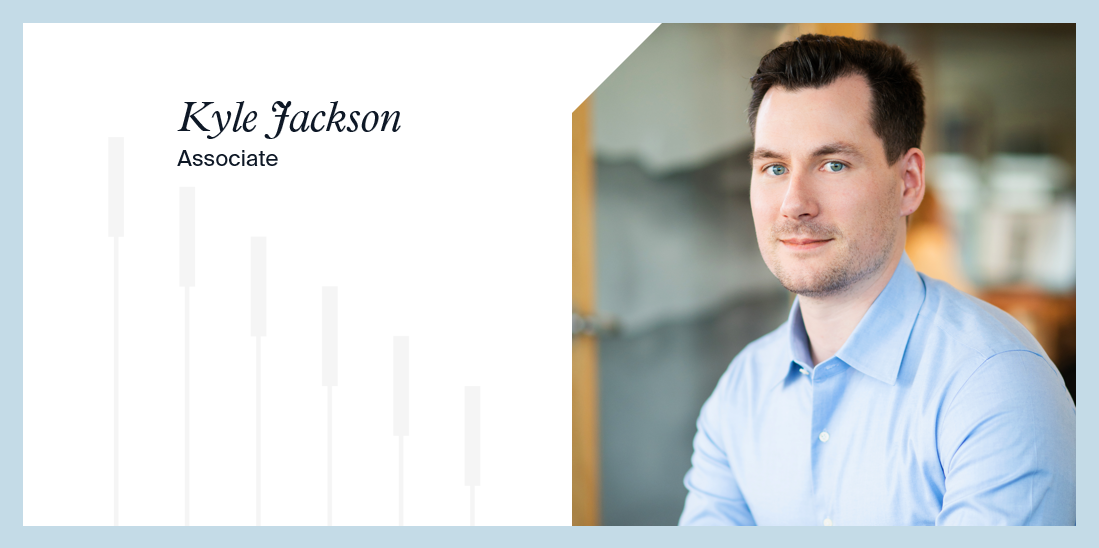
Celesta Capital is delighted to welcome Kyle Jackson as an Associate supporting our expansion into the Canada market. Kyle arrives with an unusually integrated background: a scientist trained in translational research who has also co-founded companies, worked in university technology transfer, and invested across technology and life sciences. His PhD at McMaster University focused on life sciences research, but he always knew his path ran through commercialization rather than the lab bench alone. We spoke with Kyle about bridging academia and venture, why he believes Canada is at a deep tech inflection point, and the discipline he looks for in founders.
Celesta Capital is delighted to welcome Kyle Jackson as an Associate supporting our expansion into the Canada market. Kyle arrives with an unusually integrated background: a scientist trained in translational research who has also co-founded companies, worked in university technology transfer, and invested across technology and life sciences. His PhD at McMaster University focused on life sciences research, but he always knew his path ran through commercialization rather than the lab bench alone. We spoke with Kyle about bridging academia and venture, why he believes Canada is at a deep tech inflection point, and the discipline he looks for in founders.
Your academic path was rooted in commercialization from the start. Where did that come from?
I knew early on that I did not want a traditional academia path, but I did want the research mindset. Basic science discovers the new material or the targetable protein on a cell surface. Translational science creates the path where a patient benefits from it. I am a translational scientist by training, and now I act as a translational investor.
From the very start, my academic journey was rooted in both research and commercialization. I did a fairly unique undergrad program at McMaster University, Biomedical Discovery and Commercialization, which you can think of as a dual finance and drug discovery degree. We focused on antibiotic drug discovery and I co-founded two companies during my undergrad: a drug-discovery AI platform and a medical device company.
For my PhD, I stayed at McMaster and moved into bioengineering and virology. But throughout my PhD I knew I didn't want to stay in traditional academia. I wanted to keep the research mindset, forming hypotheses, asking the right questions, while staying anchored in applied, commercially relevant science.
Commercialization of university research plays a crucial role in the dynamism of Silicon Valley. How does the Canada ecosystem compare?
In the U.S., commercialization is endogenous to the big academic institutions; UCSF, MIT, Harvard. That culture is deeply enshrined. I'd love to see it just as enshrined in Canada, and I think we're at an inflection point where it's starting to take hold. A lot of it comes down to culture. The U.S. has a perpetual willingness to take risk and deploy capital and see where it goes. Canada is more conscientious about being a good steward of public and private finances. That's not a bad thing, as it's spared us some of the worst macroeconomic downsides, but it's a double-edged sword, because that risk aversion has held back our innovation sector.
It's not that we lack innovative capacity. The modern AI phenomenon has deep Canadian roots, as do many of today's obesity medications. The issue has been an underlying assumption that we can't scale companies here the way the U.S. can, so a lot of that talent and IP heads south. But the desire to stay and grow companies in Canada is changing, driven a lot by geopolitics and a new generation that genuinely wants to build here.
In the academic world, patents have become the new Nature publication.
Why do you believe Canadian deep tech sectors are well-positioned for growth? Why now?
First, the talent base: world-class researchers, and a growing share of them that want to stay in Canada. Second, the capital infrastructure. Federal and provincial programs make it remarkably cost-effective to deploy capital into startups and SMEs. When you combine that capital with the talent pool and our established innovation centers, it's a potent mix, and no deep tech investor has really grasped it at the level Celesta can. With our roots in Silicon Valley and our expertise in semiconductors and physical hardware, we're arriving at exactly the right time.
We're playing a multi-decade horizon, not a five-to-ten-year one, and we want to help build a genuine, world-class deep tech ecosystem here.
Many deep tech founders are scientists transitioning from the lab. Are there typical areas they underestimate, or where you focus your support as an advisor?
One of the biggest stumbling blocks for entrepreneurs coming out of academia is assuming the value they bring as inventors is set in stone. They often don't appreciate how much value has to be generated after a company spins out, not through any fault of their own, but because there simply haven't been enough examples of aggressive university spinouts in Canada for them to learn from. Investors, meanwhile, understand that founders need to let go of some of that sense of ownership in order to scale.
Those two perspectives can create tension. I see myself as a translator between academics and investors, with the experience to help bridge that gap. My whole PhD was translational science, taking a basic discovery and building a path to real patient or consumer benefit. I think of myself as a translational scientist, acting as a translational investor.
What drew you to join Celesta?
I come from life sciences, and I wanted to expand my skill set as much as possible early in my career. I love therapeutics and medical devices, but I'm convinced the future is a genuine confluence between technologies and traditional biotech. I wanted to join a firm who understands that vision and learn from people who've built large companies in physical AI and hardware, an area where I have no formal training.
The other driver was the talent already here, world-class operators who have been through every cycle of the market. As soon as I met Nic and Charles, I knew these were the right people to set my roots with while working to scale up the venture ecosystem in Canada.
How do you evaluate whether a technology is ready for commercialization?
The concept I carry over from biotech is the target product profile, or TPP. At its core, a TPP is an honest analysis of should I even do this? Is there room in the market? Is there a payer? Is there a user? How does it benchmark against what already exists or is in late-stage trials?
I look for that same rigor in every founder. Take a diagnostic: it's not enough to push your limit of detection lower, you have to ask how much more sensitive the diagnostic tool must be to actually materially improve how a patient is diagnosed. If it can’t meet that threshold, spending another two million on R&D to get there isn't worth it. Pushing the limits of a technology stack doesn't guarantee the market demand will be there in the end.
You talk to founders a lot about intellectual property. What's your advice?
Think critically about your IP strategy. Everyone loves patents, and in the academic world patents have become the new Nature publication. Commercially, you need to be clear about which are worth getting and which are not, because there is always a cost. A patent is double-edged: you get exclusivity for a long period, but the trade-off is disclosure. Unless you have a strong portfolio, a competitor can design a similar stack and frame their claims in a way that locks you out of the market.
What are you reading these days?
I like to read about areas where I have no formal training. I just finished Paper Soldiers by Bloomberg reporter Saleha Mohsin about how the U.S. dollar became such a powerful instrument of American influence since World War II; fascinating from a Canadian vantage point.
And I’m halfway through Conflict by General David Petraeus and Andrew Roberts, on the evolution of warfare. What strikes me is how technology ebbs and flows, we over-leverage on the newest thing, then settle back toward an equilibrium with older, proven practices. I suspect we'll see the same with AI: real advances, real consumer hesitancy, and eventually a balance.
Next on my list is clean energy and fintech.