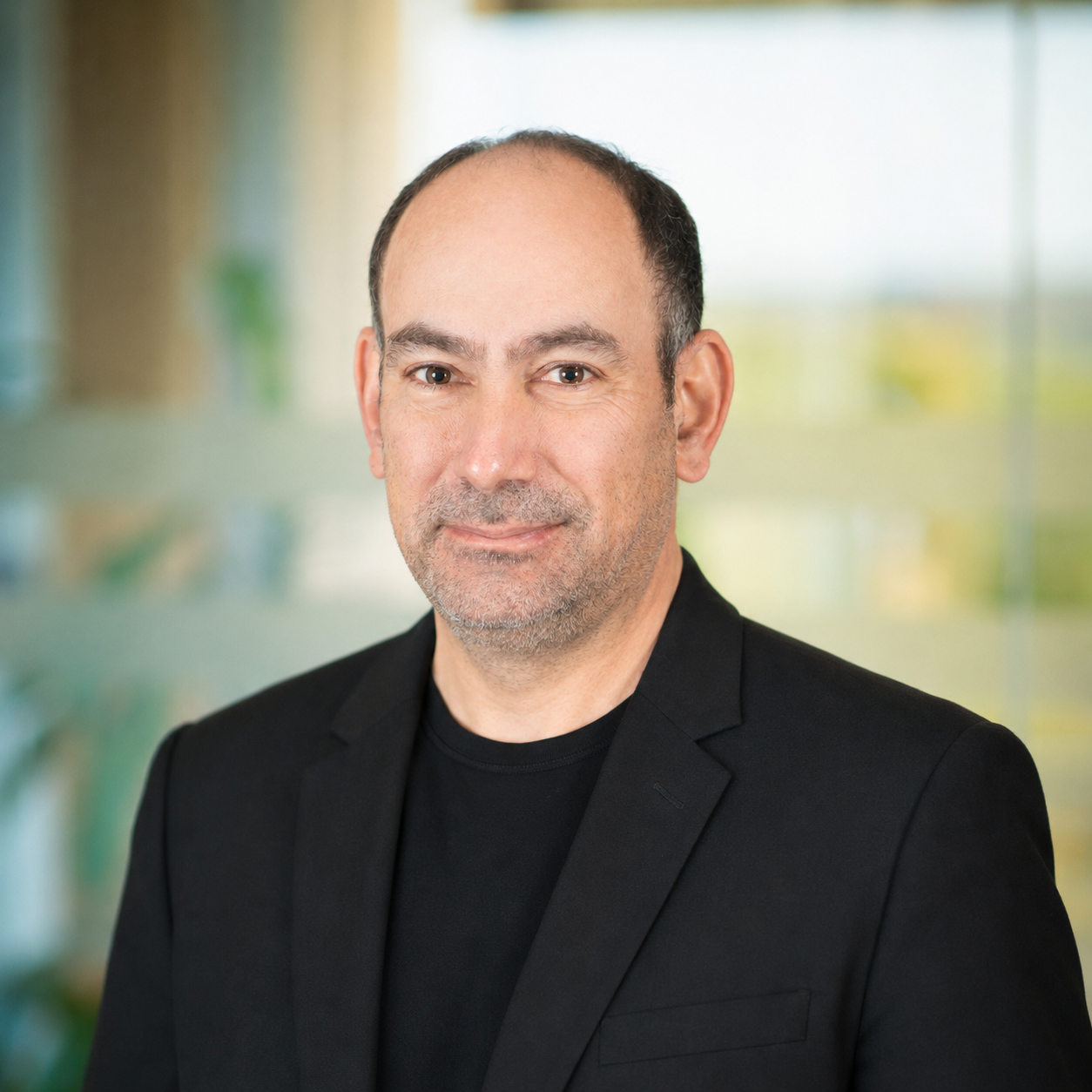
Kyle Jackson
Kyle is an early-stage investor andactive contributor to Canada's life sciences and deep tech ecosystem, with afocus on translating university and lab-born science into commercial ventures.
Before joining Celesta, Kyle worked at the intersection of research and commercialization within McMaster University's health-innovation community, including hands-on venture-building through The Clinic, where he helped advance early-stage medical technology from prototype toward company formation. His work spans biotech, med tech, and the growing convergence of AI with drug discovery and health.
Kyle holds a PhD in bioengineering from McMaster University, where his research spanned phage therapy, biotechnology, and biomedical innovation — grounding his investment work in a deep understanding of the science behind the companies he backs.
Focus Areas
Boards
In the academic world, patents have become the new Nature publication.
Q&A
Commercialization of university research plays a crucial role in the dynamism of Silicon Valley. How does the Canada ecosystem compare?
In the U.S., commercialization is endogenous to the big academic institutions; UCSF, MIT, Harvard. That culture is deeply enshrined. I'd love to see it just as enshrined in Canada, and I think we're at an inflection point where it's starting to take hold. A lot of it comes down to culture. The U.S. has a perpetual willingness to take risk and deploy capital and see where it goes. Canada is more conscientious about being a good steward of public and private finances. That's not a bad thing, as it's spared us some of the worst macroeconomic downsides, but it's a double-edged sword, because that risk aversion has held back our innovation sector.
It's not that we lack innovative capacity. The modern AI phenomenon has deep Canadian roots, as do many of today's obesity medications. The issue has been an underlying assumption that we can't scale companies here the way the U.S. can, so a lot of that talent and IP heads south. But the desire to stay and grow companies in Canada is changing, driven a lot by geopolitics and a new generation that genuinely wants to build here.
Why do you believe Canadian deep tech sectors are well-positioned for growth? Why now?
First, the talent base: world-class researchers, and a growing share of them that want to stay in Canada. Second, the capital infrastructure. Federal and provincial programs make it remarkably cost-effective to deploy capital into startups and SMEs. When you combine that capital with the talent pool and our established innovation centers, it's a potent mix, and no deep tech investor has really grasped it at the level Celesta can. With our roots in Silicon Valley and our expertise in semiconductors and physical hardware, we're arriving at exactly the right time.
We're playing a multi-decade horizon, not a five-to-ten-year one, and we want to help build a genuine, world-class deep tech ecosystem here.
Many deep tech founders are scientists transitioning from the lab. Are there typical areas they underestimate, or where you focus your support as an advisor?
One of the biggest stumbling blocks for entrepreneurs coming out of academia is assuming the value they bring as inventors is set in stone. They often don't appreciate how much value has to be generated after a company spins out, not through any fault of their own, but because there simply haven't been enough examples of aggressive university spinouts in Canada for them to learn from. Investors, meanwhile, understand that founders need to let go of some of that sense of ownership in order to scale.
Those two perspectives can create tension. I see myself as a translator between academics and investors, with the experience to help bridge that gap. My whole PhD was translational science, taking a basic discovery and building a path to real patient or consumer benefit. I think of myself as a translational scientist, acting as a translational investor.